
CyberPhore threat intelligence
Know what matters before it becomes urgent.
Security teams rarely lack information. They lack time to decide what deserves attention. CyberPhore filters the noise, connects threats to your environment, and gives the right people a clear next move.




The intelligence problem
Your team does not need another feed.
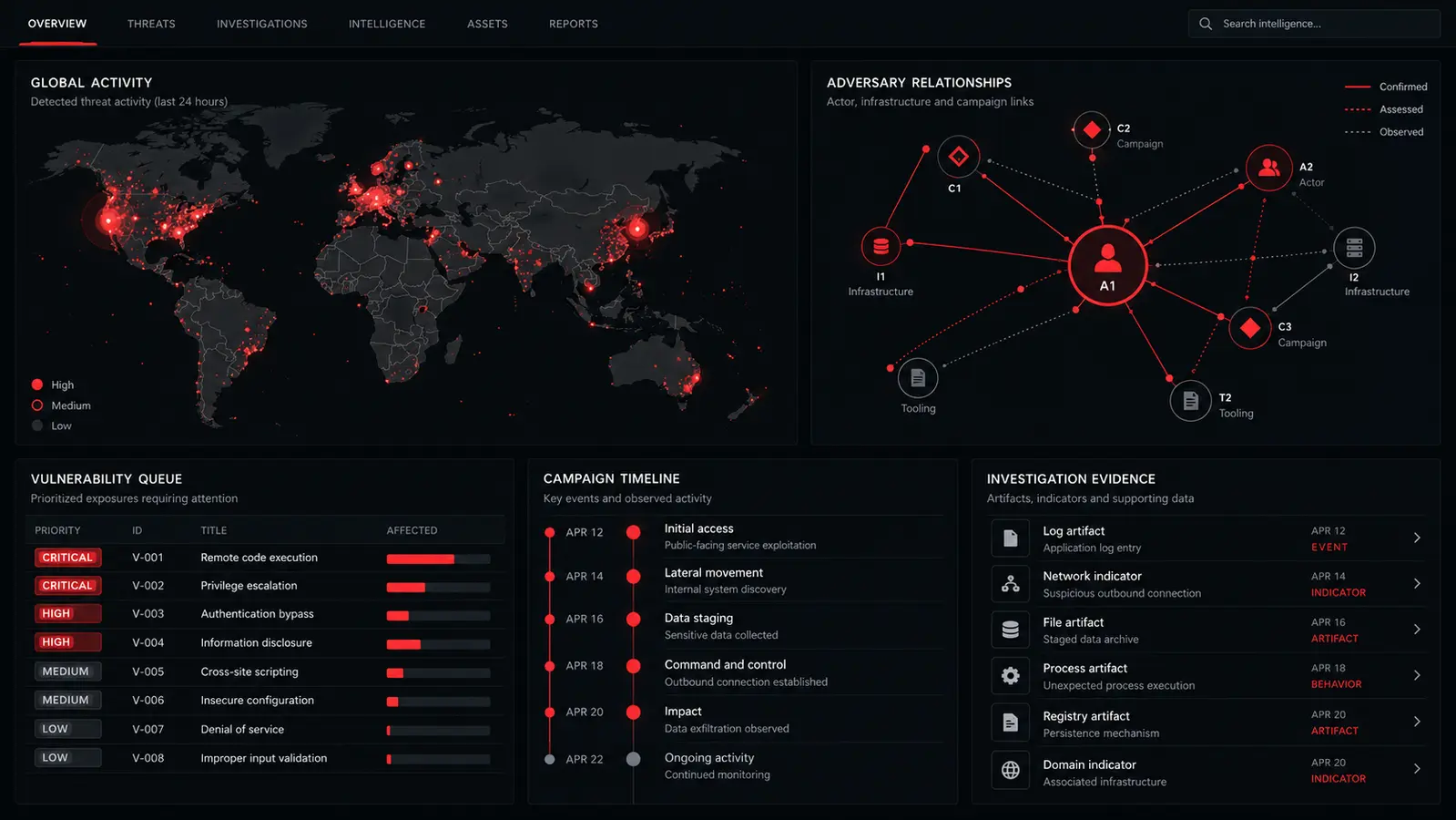
The hard part is not finding threat data. It is knowing what is credible, what touches your business, and what deserves action today.
CyberPhore connects outside activity to your assets, identities, suppliers, industry, and operating priorities. You get a clear assessment your analysts can investigate, your teams can act on, and your leaders can use.
Service scope
From raw signals to decisions your team can defend.
Start with one hard question or build a recurring intelligence function. Before work begins, we agree on scope, sources, cadence, escalation, integrations, and who needs the answer.
Intelligence direction
Define the questions to answer, the stakeholders involved, the assets and processes in scope, and the threshold for escalation.
Threat and vulnerability intelligence
Assess relevant campaigns, exploitation evidence, adversary behaviour, exposure, asset importance, and available mitigations.
Investigation support
Add history, relationships, behavioural context, and confidence to suspicious infrastructure, identities, domains, files, and events.
External exposure monitoring
Where authorized and in scope, review exposed assets, impersonation, leaked information, malicious infrastructure, and supplier-related signals.
Briefings and decision support
Deliver concise operational and leadership reporting with the finding, supporting evidence, confidence, recommended action, and accountable owner.
For leadership
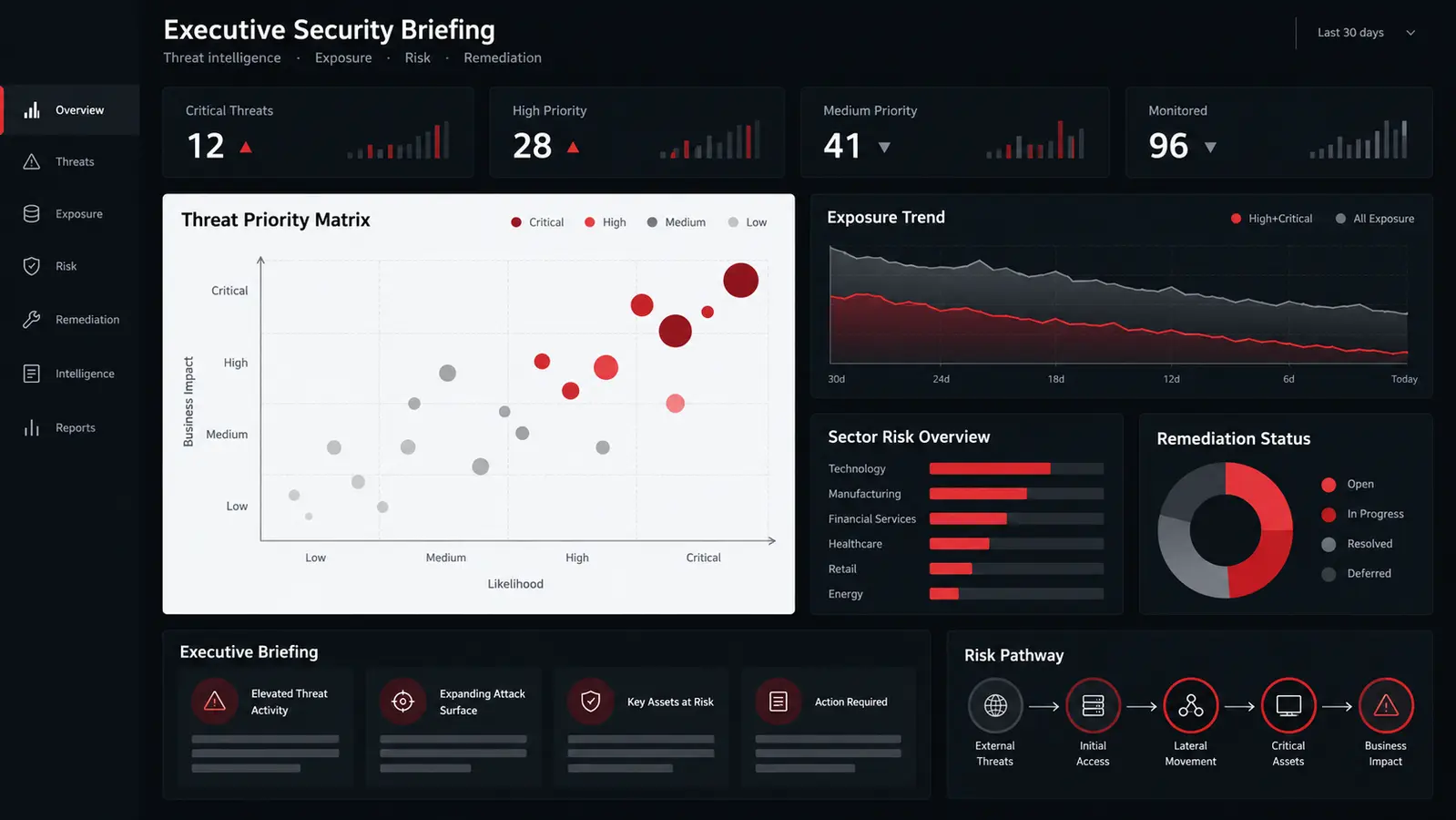
Give leaders the signal, not the noise.
A useful briefing answers four questions: what changed, why it matters to the business, what the organization is doing, and where leadership needs to decide.
Operating model
A clear method behind every recommendation.
Every collection activity starts with a question. Every assessment ends with a decision, an action, or a better question. That discipline keeps the work focused and useful.
Set direction
Agree on the requirement, scope, stakeholder, threshold, and decision timeline.
Collect
Gather authorized sources and the organizational context needed to judge relevance.
Analyze
Correlate the evidence, test competing explanations, and assess confidence.
Deliver
Present the finding through the right operational or leadership channel.
Refine
Track the response, test usefulness, and adjust requirements as conditions change.
Enterprise relevance
Same evidence. The right level of detail.
The assessment stays consistent as it moves through the organization. What changes is the language, urgency, and level of detail each audience needs to make its decision.
Established practice
Built on recognized defensive practice.
Our approach draws on established guidance for threat information, exploitation-based prioritization, and adversary behaviour. These public frameworks inform the work; they do not imply affiliation, endorsement, or certification.
Practical questions
Straight answers before you engage.
Threat intelligence can mean a feed, a platform, an analyst, or an operating program. The right model depends on the decisions your organization needs to support.
How is this different from a threat feed?
A feed supplies data. An intelligence service determines what that data means for your organization, how confident the assessment is, and what action it supports. Feeds can be useful inputs, but they are not the finished product.
Can CyberPhore work with our current security tools?
Yes, where the required access and integrations are available. The engagement can be designed around your telemetry, security platforms, ticketing workflow, and reporting channels. Integration depth is confirmed during scoping.
Do we need a large SOC to benefit?
No. A focused requirement such as vulnerability prioritization, investigation support, or a recurring industry briefing can support a lean IT or security team without requiring a full internal intelligence program.
What does a first engagement look like?
We begin with the decision you need to make, the assets and stakeholders involved, your available data, and the required cadence. From there, we recommend a focused scope, delivery format, and review cycle.
Can threat intelligence prevent every attack?
No. It improves decision quality and preparedness, but it cannot remove uncertainty or guarantee prevention. It works best alongside asset visibility, vulnerability management, detection, incident response, and clear ownership.
Start with a focused requirement
Start with the question keeping your team stuck.
Tell us what is difficult to judge today. We will review the assets, tools, stakeholders, and reporting needs around that decision, then recommend a practical first scope.