In an era of increasingly sophisticated cyber threats, understanding how threat intelligence can enhance incident response is crucial for maintaining the security of organizations. Threat intelligence encompasses real-time data about potential threats, enabling teams to preemptively address vulnerabilities. By integrating such intelligence, businesses can significantly improve their ability to detect, respond to, and mitigate various cyber threats. This article will explore how threat intelligence can revolutionize incident response through proactive threat hunting, support from advanced platforms, and effective integration of detection tools. Additionally, we will examine relevant case studies and outline best practices that organizations can adopt to improve their cybersecurity posture.
Table of Contents
- How Threat Intelligence Transforms Incident Response: Boosting Cyber Threat Detection and Response Efficiency
- What Is Threat Intelligence and How Does It Enhance Incident Response?
- Which Proactive Threat Hunting Techniques Strengthen Incident Response?
- How Do Threat Intelligence Platforms Support Incident Response Best Practices?
- How Are Cyber Threat Detection Tools Integrated with Incident Response?
- What Are Real-World Case Studies Demonstrating Threat Intelligence Transforming Incident Response?
- Which Best Practices Optimize Incident Response Through Threat Intelligence?
Need Expert Cybersecurity Help?
Get expert guidance from CyberPhore. We design, deploy, and manage comprehensive cybersecurity programs with measurable outcomes.
Book a Free ConsultationHow Threat Intelligence Transforms Incident Response: Boosting Cyber Threat Detection and Response Efficiency
What Is Threat Intelligence and How Does It Enhance Incident Response?
Threat intelligence represents the collection, analysis, and dissemination of information related to current or potential threats that could harm an organization. By providing insights into adversarial tactics and techniques, it enhances incident response capabilities. Organizations can leverage threat intelligence to prepare for possible attacks, enabling them to implement defensive measures in advance, maintain operational continuity, and reduce detection and response times.
Which Key Concepts Define Threat Intelligence and Incident Response?
Key concepts that define threat intelligence involve understanding the data sources, types of threats, and how information flows within an organization. In the context of incident response, factors such as detection speed, response effectiveness, and recovery strategies come into play. Integrating these frameworks allows organizations to develop a robust cybersecurity strategy that aligns with their risk management goals.
How Does Threat Intelligence Improve Cyber Threat Detection and Mitigation?
Threat intelligence improves cyber threat detection and mitigation by providing contextual data that informs incident responders about the nature and severity of threats. By analyzing past incidents and understanding adversaries’ methods, teams can deploy tailored defensive measures. Additionally, organizations utilizing threat intelligence can rapidly share information between departments, bolstering collective threat awareness and enhancing the overall mitigation process.
Which Proactive Threat Hunting Techniques Strengthen Incident Response?

Proactive threat hunting techniques play a vital role in anticipating and countering potential threats. They involve actively searching for indicators of compromise on networks before incidents occur. Such tactics complement defensive measures, providing enhanced visibility and helping to ensure that organizations can respond quickly and effectively to emerging threats.
What Are Effective Strategies for Proactive Threat Hunting?
Effective strategies for proactive threat hunting include implementing behavioral analysis, using threat intelligence feeds to identify known threat patterns, and adopting machine learning algorithms to predict future attacks. Regular security audits and vulnerability assessments also enhance situational awareness and enable teams to address weaknesses before they can be exploited.
How Does Proactive Threat Hunting Reduce Incident Response Time?
Proactive threat hunting significantly reduces incident response time by identifying potential threats early in their lifecycle. By utilizing tools that automate detection and integrate data from various sources, organizations can minimize the time from detection to response. Statistical evidence indicates that organizations employing proactive strategies can achieve a 30-50% reduction in average incident response times, allowing them to maintain business continuity more effectively.
How Do Threat Intelligence Platforms Support Incident Response Best Practices?
Threat intelligence platforms serve as central hubs for collecting, analyzing, and disseminating threat data across organizations. These platforms enhance incident response best practices by providing real-time information and insights into threats, thus facilitating informed decision-making during incidents.
What Are the Essential Capabilities of Threat Intelligence Platforms?
Essential capabilities of threat intelligence platforms include data aggregation from diverse sources, threat analysis and reporting, automation of alerts, and seamless integration with existing security tools. These functions help organizations respond to threats efficiently while maintaining a proactive stance against potential vulnerabilities.
How to Compare Leading Threat Intelligence Platforms?
When comparing leading threat intelligence platforms, organizations should focus on criteria such as data accuracy, integration capabilities, user-friendliness, and customer support. An effective comparison might highlight the ability of a platform to produce actionable insights rapidly, its scalability, and whether it offers customization to meet specific business needs.
Protect Your Business Now
From detection to response, get complete protection with CyberPhore.
Get ProtectedHow Are Cyber Threat Detection Tools Integrated with Incident Response?
Cyber threat detection tools are pivotal for ensuring organizations can respond efficiently to security incidents. Proper integration of these tools into the incident response process enhances operational effectiveness and facilitates quicker resolution of issues.
Which Tools Enable Automated Incident Response Using Threat Intelligence?
Numerous tools enable automated incident response by using threat intelligence, including Security Information and Event Management (SIEM) systems, Endpoint Detection and Response (EDR) solutions, and Automated Response Systems (ARS). These tools work together to create an interconnected security architecture that improves response times and reduces manual intervention requirements.
How Does Threat Intelligence Automation Enhance Incident Accuracy and Speed?
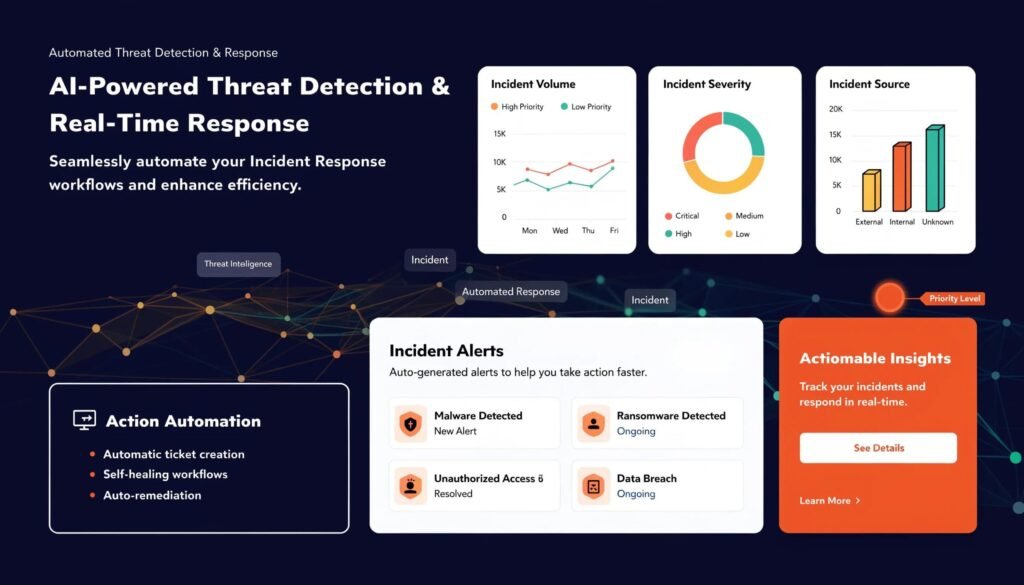
Threat intelligence automation enhances incident accuracy and speed by eliminating human error in the analysis process. By automating the collection and interpretation of threat data, organizations can achieve greater consistency in their incident response efforts. Case studies indicate that organizations utilizing automated systems see a marked improvement in both speed and accuracy of their responses.
What Are Real-World Case Studies Demonstrating Threat Intelligence Transforming Incident Response?
Real-world case studies provide valuable insights into how organizations successfully apply threat intelligence to enhance their incident response efforts. Companies that adopt these frameworks often report measurable improvements in their detection and mitigation capabilities.
How Have Enterprises Successfully Applied Threat Intelligence in Incident Response?
Enterprises have successfully applied threat intelligence by creating dedicated teams focused on threat hunting and analysis. For example, many organizations have integrated threat intelligence into their operations by establishing Security Operations Centers (SOCs) that leverage intelligence to improve threat awareness and response procedures.
Which Frameworks Support Threat Intelligence-Driven Incident Response?
Numerous frameworks support threat intelligence-driven incident response, including the MITRE ATT&CK framework, which categorizes adversary tactics and techniques, and NIST’s Cybersecurity Framework, which provides guidelines for improving security controls and enhancing incident response capabilities. These frameworks help organizations create structured approaches to threat management, improving overall effectiveness.
Which Best Practices Optimize Incident Response Through Threat Intelligence?
Incorporating best practices centered around threat intelligence can significantly enhance incident response strategies. By continuously refining these practices, organizations can be better prepared to deal with evolving threats.
How to Develop Incident Response Playbooks Using Threat Intelligence?
Developing incident response playbooks using threat intelligence involves creating detailed, step-by-step procedures for addressing specific types of threats. These playbooks should be regularly updated based on the latest threat intelligence findings to ensure they remain relevant and effective.
What Are Key Metrics to Monitor Incident Response Effectiveness?
Key metrics for monitoring incident response effectiveness include response time to incidents, the accuracy of threat detection, and the overall impact of incidents on business operations. Tracking these metrics provides organizations with insights into their incident management processes and helps refine strategies for future incidents.
Ready to Get Started?
Talk to CyberPhore's team. We'll assess your needs and design a custom solution.
Free Security Assessment
Sarah Mitchell
Senior Cybersecurity Analyst
Certified cybersecurity professional with 8+ years in threat analysis, incident response, and security architecture. Specializes in cloud security, compliance, and digital risk management. Passionate about protecting businesses from evolving threats.