Cyber security is hard for beginners, but not in the way most people fear. The challenge comes from breadth, unfamiliar language, and the need to practice real defenses, not from any one impossible topic. Once you understand the basics, the whole field starts to feel structured instead of chaotic.
Table of Contents
- How Hard Is Cyber Security for Beginners?
- What Cyber Security Means in Simple Terms
- Why Cyber Security Feels Hard at First
- What Beginner-Friendly Skills Matter Most
- The Hardest Part for Most Beginners: Hands-On Practice
- How Long It Takes to Learn the Basics
- Cyber Security Compared With Other Beginner-Friendly Tech Paths
- The Best Way to Start Learning Cyber Security
- Certifications, Courses, and Degrees: What Helps Most
- Common Mistakes That Make Cyber Security Feel Harder
- How Cybersecurity Connects to Real Business Risk
- How CyberPhore Fits Into a Beginner’s Security Journey
- Frequently Asked Questions
- Final Takeaway for Beginners
Need Expert Cybersecurity Help?
Get expert guidance from CyberPhore. We design, deploy, and manage comprehensive cybersecurity programs with measurable outcomes.
Book a Free ConsultationHow Hard Is Cyber Security for Beginners?
Cyber security is challenging for beginners, but it is absolutely learnable. The first few weeks feel dense because you are learning how systems work, how attackers think, and how defenses fit together, all at once.
That is what makes the field feel intimidating. Not genius-level difficulty. Volume.
Think of it like learning to drive in a city with heavy traffic, confusing signs, and a lot of different rules. The road is not mysterious once you know how lanes, signals, and timing work. Cyber security works the same way. When you learn the fundamentals in the right order, the subject becomes far more manageable.
The real answer to how hard is cyber security is simple: it is difficult at first, then steadily easier as your foundation grows. Success comes from consistency, hands-on practice, and clear sequencing, not from trying to master everything on day one.
What Cyber Security Means in Simple Terms
Cyber security is the practice of protecting devices, accounts, data, networks, and business operations from unauthorized access, disruption, and loss. That includes keeping information private, keeping systems available, and preventing attackers from taking control of something they should not touch.
In plain business language, cyber security protects the tools and information that keep work moving. If email stops working, files get encrypted, logins are stolen, or cloud systems go offline, the business feels it immediately.
What Cyber Security Protects
At a basic level, cyber security protects endpoints like laptops and desktops, email accounts, user identities, business data, cloud services, internal networks, and continuity of operations. Those are the places where attacks land first.
A stolen password is not just a login problem. It is an access problem, a data problem, and sometimes an operations problem. A phishing email is not just junk mail. It is often the first step in a much larger compromise.
Why Businesses Care About It
Businesses care about cyber security because downtime costs money, breaches damage trust, and weak protection creates avoidable risk. A security failure is never just technical. It affects customers, staff, revenue, and continuity.
That is where managed protection matters. CyberPhore functions as a managed protection system, giving small businesses steady, enterprise-grade security without the complexity of building a large internal security team. The goal is simple, lower risk, better uptime, and fewer surprises.
Why Cyber Security Feels Hard at First
Cyber security feels hard because it is broad, constantly changing, and full of concepts that connect to each other. Beginners do not struggle because the field is impossible. Beginners struggle because the field is layered.
The moment you start understanding one area, it points to three more. That is normal.
The Field Covers Many Disciplines
Cyber security overlaps with networking, operating systems, identity and access management, cloud basics, risk management, and incident response. You need enough knowledge in each area to understand what is being protected and how attacks happen.
That is why the subject feels unfamiliar at first. You are not learning one skill, you are learning how several systems interact. Once the pieces connect, the logic becomes clearer.
Threats Change Constantly
Attackers do not sit still. Phishing gets more convincing, ransomware keeps evolving, supply-chain compromise reaches through vendors, and AI-assisted attacks make malicious activity faster and more adaptive. The landscape keeps moving, and security has to move with it.
Modern cyberattacks are more sophisticated and widespread than ever, which means beginners need to learn both the basics and the habit of staying current. That sounds demanding, because it is. But it is also predictable once you accept that cyber security is a moving target.
You Need a Problem-Solving Mindset
Cyber security rewards clear thinking, attention to detail, and persistence. You spend a lot of time asking practical questions: What changed? What is exposed? What is trusted? What broke first?
That is why the field feels different from rote memorization. You are not just collecting facts. You are learning how to interpret signals and make decisions under uncertainty.
What Beginner-Friendly Skills Matter Most
The easiest way to make cyber security less overwhelming is to focus on the core skills that support everything else. These are the building blocks. Skip them, and the field feels random. Learn them, and the field starts to make sense.
Networking Basics
Networking basics matter because every device, website, and cloud service depends on communication. You need to understand IP addresses, ports, protocols, VPNs, and firewalls well enough to follow how traffic moves.
That does not mean becoming a network engineer before you start. It means understanding enough to answer simple questions, like how a browser reaches a website or why a firewall blocks a connection. Once that clicks, many security topics become easier to read.
Operating System Fundamentals
You also need a basic grasp of Windows and Linux, because attackers and defenders both work through operating systems. File permissions, processes, services, logs, updates, and user settings all matter.
This is where beginners often slow down. If you do not know how a system behaves normally, you cannot spot when something looks wrong. Security depends on knowing the difference between ordinary and suspicious.
Authentication and Access Control
Passwords, multi-factor authentication, permissions, and least privilege are core security concepts for a reason. They control who gets in and what that person can do once inside.
Weak authentication is one of the easiest ways for an attacker to walk through the front door. Human error remains a major cause of breaches, and poor passwords, credential sharing, and phishing sit near the top of that list. For beginners, this is good news, because the first improvements are simple and high-value.
Common Threat Types
Beginners need to recognize phishing, malware, ransomware, and social engineering quickly. These attacks show up constantly because they work against both technology and people.
Phishing tricks users into revealing credentials or clicking bad links. Malware damages, spies, or disrupts. Ransomware locks access until payment is demanded. Social engineering uses pressure, trust, or urgency to get a person to make a bad decision. The names sound technical, but the mechanics are usually straightforward.
The Hardest Part for Most Beginners: Hands-On Practice

Reading about cyber security gives you vocabulary. Practice gives you judgment. That is the dividing line.
The subject stays abstract until you work through real examples. Then it starts to click.
Why Memorization Fails
Cyber security is not a definition test. You do not succeed by memorizing terms and hoping the right answer appears later. You succeed by recognizing patterns, understanding risk, and responding correctly in context.
A beginner can recite what phishing means and still fall for a convincing phishing message. That gap is the point. Knowledge becomes useful only when you can apply it under realistic conditions.
Safe Ways to Practice
The best practice happens in safe environments, such as virtual machines, beginner labs, capture-the-flag exercises, and guided simulations. Those tools let you make mistakes without damaging a real system.
Structured practice matters because it turns theory into recognition. Reviewing phishing emails, reading logs, and testing simple defenses in a sandbox trains your eye to notice what feels off. That kind of repetition is what builds skill, not passive reading.
How Practice Builds Confidence
Repeated exposure lowers the mental load. At first, every warning sign looks new. After enough practice, suspicious attachments, reused passwords, odd login behavior, and strange traffic patterns become familiar.
That familiarity is the real milestone. Once common attack patterns stop looking mysterious, you stop feeling overwhelmed and start making better decisions faster.
How Long It Takes to Learn the Basics
The basics of cyber security are learnable in a matter of months, not years, if you stay focused. The key is learning the right things in the right order.
A lot of beginners fail because they try to master the entire field before they have learned the first layer. That is the wrong goal.
What You Can Learn in the First Few Months
In the early stage, you can learn core terminology, basic networking, operating system concepts, passwords, multi-factor authentication, common threats, and simple defensive habits. You can also build enough confidence to talk about security in plain language.
A structured beginner roadmap often suggests that the first 8 to 12 weeks should focus on fundamentals plus hands-on practice. That is a realistic target if you keep your scope narrow and avoid random detours.
What Takes Longer
Deeper work takes longer. Incident response, cloud security, threat analysis, secure architecture, and advanced defensive operations require more time, more repetition, and more context.
That is normal. You do not need to master advanced topics before you can become useful. You need to build a solid base and then deepen it one layer at a time.
What Progress Looks Like
Progress shows up in better judgment. You recognize a phishing attempt faster. You understand why MFA matters. You can explain why a password manager reduces risk. You stop treating every alert like a crisis.
You also start speaking in business terms, not just technical terms. That is a strong sign that the subject is becoming real for you.
Cyber Security Compared With Other Beginner-Friendly Tech Paths
Cyber security is not the same as general IT or software development, and that difference matters. The difficulty depends on what you already know and what kind of work fits your strengths.
Compared With General IT
If you already understand help desk work, basic systems, and networking, cyber security becomes much easier. You already know how devices behave, how users get blocked, and how problems surface in daily operations.
That background gives you context. Beginners without it can still succeed, but they often need more time to get comfortable with the basics.
Compared With Software Development
Cyber security often requires less coding at the beginning than software development does, but it demands more attention to systems, risk, access, and operational discipline. You are looking for weak points, not building features from scratch.
That makes the field accessible to people who are strong in analysis and process. You do not need to be a programmer to start, though scripting helps later.
What Makes It More Accessible Than It Looks
The biggest misconception is that you must know everything before you begin. You do not. You need a path.
Once you stop trying to learn the whole field at once, cyber security becomes far more approachable. Structure beats panic every time.
Protect Your Business Now
From detection to response, get complete protection with CyberPhore.
Get ProtectedThe Best Way to Start Learning Cyber Security
Start with one learning track and build from the ground up. That is the cleanest way to reduce overwhelm.
Random videos, tool demos, and scattered tutorials create the illusion of progress without the foundation. Beginners need sequence, not noise.
Start With One Learning Track
Pick one starting lane, such as security operations, cloud security, or application security. Do not bounce between all three. Each path builds on different priorities, and mixing them too early only slows you down.
Focused learning creates momentum. Momentum creates confidence. Confidence keeps you going when the subject gets dense.
Build a Strong Foundation First
Start with networking, operating systems, identity, authentication, and common attacks. Those topics explain how systems connect, how attackers get in, and how defenders reduce exposure.
A beginner who understands these basics can read security advice with much less confusion. Without them, even simple guidance feels disconnected.
Use Structured Learning Resources
Courses, books, labs, and beginner certifications give you a clear order. That matters because cyber security is easier to learn when someone has already organized the sequence for you.
Structured learning also keeps you from jumping too quickly into flashy “ethical hacking” content before you understand what you are hacking, why it matters, and how defense works around it.
Certifications, Courses, and Degrees: What Helps Most
Different learning paths solve different problems. The right choice depends on whether you need structure, proof of knowledge, or a broader academic base.
Beginner Certifications
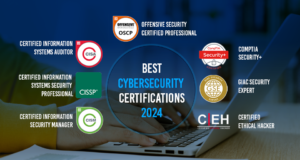
Beginner certifications such as Security+ and Network+ are useful because they force structure. They cover core concepts, give you a defined study path, and help you measure progress.
For many beginners, that structure is the real value. A certification does not make you job-ready on its own, but it gives you a dependable framework to learn from.
Online Courses and Labs
Online courses work well when they include labs. Pure theory gets stale fast. Labs turn concepts into action, which is what security learning requires.
That is why safe practice environments matter so much. They let you test, break, and fix without risk. And honestly, that is where most of the learning happens.
Degree Programs
A degree adds value when you want deeper technical grounding, stronger long-term career flexibility, or a more formal academic path. It is not the only route into the field, but it can support broader growth.
For beginners, the main question is not whether a degree is mandatory. It is whether the program gives you enough foundation, practice, and clarity to keep moving forward.
Common Mistakes That Make Cyber Security Feel Harder
Many beginners make the field harder than it needs to be. The problem is not ability. The problem is approach.
Trying to Learn Everything at Once
If you jump from phishing to cloud security to malware analysis to ethical hacking in the same week, nothing sticks. The field becomes a pile of disconnected terms.
Focus solves that. Learn one layer, then the next.
Skipping the Fundamentals
Skipping networking or operating system basics creates needless friction. You end up memorizing security terms without understanding the environment those terms describe.
That is why so many beginners feel stuck. The missing piece is usually a foundation, not talent.
Avoiding Practice
You can read for weeks and still not know how to spot a real attack. Passive learning gives you recognition without response.
Cyber security requires repetition. A lot of it.
Chasing Tools Before Understanding Risk
Tools matter, but tools do not define security. The business problem comes first.
If you do not understand the risk, the tool just becomes another dashboard. That is not protection. That is clutter.
How Cybersecurity Connects to Real Business Risk
Cyber security is easier to understand when you stop treating it as abstract technology and start looking at business impact. The losses are concrete.
Ransomware and Downtime
Ransomware is one of the clearest examples of security turning into business disruption. When systems get encrypted, staff lose access, operations slow down, and recovery gets expensive.
The cost is not just the ransom demand. It is downtime, restoration, lost productivity, and the time it takes to get back to normal. Extortion and ransomware incidents now average around $5 million, which shows how fast a single event can escalate.
Supply-Chain and Vendor Risk
Your business does not live in isolation. Vendors, software providers, and service partners all affect your exposure.
Vendor compromise is difficult because one weak link can cascade through the supply chain. That makes security a shared responsibility, not a box you check once and forget.
Insider and Human Error Risk
People create risk every day without meaning to. A reused password, a bad link, a careless upload, or an unencrypted file share can expose valuable data.
That is why cyber security is partly a human behavior problem. The best controls still depend on people following the process.
How CyberPhore Fits Into a Beginner’s Security Journey
CyberPhore is built for businesses that need steady protection without the weight of managing everything internally. That matters because security gets harder when the process is fragmented.
Enterprise-Grade Security Without Enterprise Complexity
A small business should not need a full in-house security department to stay protected. A managed protection system brings discipline, coverage, and consistency without forcing you to assemble everything yourself.
That is the real advantage. Fewer moving parts. Less confusion. More continuity.
Continuous Monitoring and Early Risk Reduction
Cyber security gets easier when risk is spotted early instead of after damage spreads. Continuous monitoring helps catch issues sooner, which lowers the chance that a small problem becomes a business disruption.
The goal is calm, not chaos. Ongoing visibility keeps protection active instead of reactive.
Protection That Supports Uptime and Continuity
Security is not just about stopping attacks. It is about keeping work moving. When protection is steady, the business keeps operating with fewer interruptions and less recovery work.
That is where managed support earns its place. It ties security to uptime, continuity, and predictable risk reduction.
Frequently Asked Questions
Is Cyber Security Hard to Learn Without Experience?
It is hard at first because the terminology and concepts are unfamiliar, but it is fully learnable with structure and repetition. Beginners do best when they start with fundamentals and practice in safe environments.
Do You Need to Be Good at Math or Coding?
No. Many entry-level paths do not require strong coding or advanced math. Basic scripting helps later, but it is not the starting requirement for most beginners.
Can You Learn Cyber Security on Your Own?
Yes, as long as you follow a structured path and include hands-on labs. Self-study works best when it is organized, not random.
What Should You Focus on First?
Start with networking, operating systems, passwords, multi-factor authentication, and common threats like phishing and malware. Those basics support everything else.
How Long Does It Take to Learn the Basics?
A focused beginner can learn the basics in a few months. Deeper job-ready skill takes longer because it requires practice, context, and consistency.
Is Cyber Security Harder Than Other Tech Fields?
It is different, not automatically harder. Cyber security rewards problem-solving, attention to detail, and steady learning, while other tech fields may lean more heavily on coding or system building.
Final Takeaway for Beginners
Cyber security is hard in the same way any serious professional skill is hard, it asks for structure, discipline, and repetition. It is not out of reach, and it is not reserved for technical prodigies.
If you understand the fundamentals, practice in safe environments, and stay focused on one path at a time, the field becomes manageable. Once that happens, you are no longer guessing at security, you are recognizing it in practice.
Ready to Get Started?
Talk to CyberPhore's team. We'll assess your needs and design a custom solution.
Free Security Assessment