A single ransomware attack can cost a mid-sized company over $1.85 million in 2026. That figure includes downtime, data recovery, legal fees, and reputational damage. Yet most business owners still treat cybersecurity as an IT expense rather than a strategic investment. The threat environment has shifted dramatically over the past three years. Attackers now use AI-driven tools to probe networks, craft convincing phishing emails, and exploit zero-day vulnerabilities faster than ever before. Your internal IT team, no matter how talented, cannot monitor every endpoint around the clock. This is precisely why managed cybersecurity services have become essential for businesses of every size. Whether you run a 50-person firm or a company with 2,000 employees, understanding how these services work and how to choose the right provider will directly affect your ability to survive a breach. This guide breaks down the components, costs, compliance implications, and selection criteria you need to make an informed decision.
Table of Contents
- Understanding Managed Cybersecurity Services for Modern Businesses
- Core Components of a Managed Security Strategy
- The Business Case: ROI and Risk Mitigation
- Navigating Compliance and Regulatory Requirements
- How to Choose the Right Managed Security Partner
- Future-Proofing Your Business Against Emerging Threats
Need Expert Cybersecurity Help?
Get expert guidance from CyberPhore. We design, deploy, and manage comprehensive cybersecurity programs with measurable outcomes.
Book a Free ConsultationUnderstanding Managed Cybersecurity Services for Modern Businesses
The cybersecurity market has matured significantly since the early days of antivirus software and basic firewalls. Businesses now face a constant stream of sophisticated threats: from supply chain attacks to AI-generated social engineering campaigns. The old model of hiring one or two IT professionals and hoping for the best no longer holds up. A managed approach means outsourcing your security operations to specialists who do nothing but defend organizations like yours, every hour of every day.
What is a Managed Security Service Provider (MSSP)?
An MSSP is a third-party organization that monitors, manages, and responds to security threats on your behalf. Think of it as an extension of your team, but one that operates a dedicated Security Operations Center (SOC) staffed with trained analysts. MSSPs typically handle firewall management, intrusion detection, endpoint protection, log analysis, and incident response. They use enterprise-grade tools that would be prohibitively expensive for most individual businesses to purchase and maintain.
The key distinction between an MSSP and a standard IT services company is focus. An IT provider might handle your email migration, printer setup, and help desk tickets. An MSSP focuses exclusively on keeping attackers out of your systems.
The Shift from Reactive to Proactive Defense
For years, businesses operated under a reactive model. Something broke, someone fixed it. A breach happened, and the team scrambled to contain damage. That approach is no longer viable. Attackers move too fast. The average time from initial compromise to data exfiltration dropped to just 62 minutes in late 2025, according to CrowdStrike’s annual threat report.
Proactive defense means continuous threat hunting, behavioral analytics, and predictive modeling. Your MSSP does not wait for an alert. They actively search for indicators of compromise within your environment. This shift from “respond after the fact” to “prevent before impact” is the single most important evolution in business security over the past decade.
Core Components of a Managed Security Strategy
Not all managed security offerings are identical. The best providers deliver a layered defense that covers detection, response, and ongoing hardening. Understanding these core components helps you evaluate what you are actually paying for.
24/7 Monitoring and Threat Detection
Cyberattacks do not follow business hours. Most ransomware deployments happen between Friday evening and Monday morning, when offices are empty and response times are slowest. A credible MSSP operates a SOC that watches your network traffic, endpoint behavior, and cloud environments around the clock.
This monitoring relies on Security Information and Event Management (SIEM) platforms that aggregate logs from across your infrastructure. Analysts correlate events in real time, separating genuine threats from false positives. Without this capability, a critical alert at 2 a.m. on a Saturday could go unnoticed until Monday, giving attackers an enormous head start.
Incident Response and Remediation
Detection means nothing without swift action. Your managed security partner should have a documented incident response plan tailored to your environment. When a threat is confirmed, the response team isolates affected systems, contains the spread, and begins forensic analysis.
Speed matters enormously here. The difference between a contained incident and a full-scale breach often comes down to minutes. A strong MSSP will have predefined playbooks for common attack types: ransomware, business email compromise, credential theft, and insider threats. They will also conduct post-incident reviews to close the gaps that allowed the attack in the first place.
Vulnerability Management and Patching
Unpatched software remains one of the most exploited attack vectors. A 2025 Verizon Data Breach Investigations Report found that 32% of breaches involved exploitation of known vulnerabilities for which patches were already available. Your MSSP should run regular vulnerability scans, prioritize findings by risk severity, and either apply patches directly or coordinate with your IT team to do so.
This is not a one-time activity. New vulnerabilities emerge daily. Effective management requires continuous scanning, clear prioritization, and fast remediation cycles.
The Business Case: ROI and Risk Mitigation
Security spending feels abstract until you compare it against the cost of a breach. Building a clear business case helps justify the investment to stakeholders and board members.
Cost Comparison: In-House vs. Managed Services
Hiring a full in-house security team is expensive. A single senior security analyst in the United States commands a salary between $120,000 and $165,000 in 2026. You need multiple analysts to cover shifts, plus a security engineer, a compliance specialist, and a manager. Add the cost of SIEM licensing, endpoint detection tools, and training, and you are looking at $800,000 to $1.5 million annually for a small team.
A managed security engagement for a mid-sized business typically runs between $5,000 and $25,000 per month, depending on scope. That is a fraction of the in-house cost, and it comes with immediate access to a full team of specialists and enterprise-grade tooling.
Bridging the Cybersecurity Talent Gap
The global cybersecurity workforce shortage reached 3.9 million unfilled positions in 2025. That gap has not closed. Finding, hiring, and retaining qualified security professionals is one of the hardest talent challenges any business faces. Your competitors are bidding for the same limited pool of candidates.
Partnering with an MSSP sidesteps this problem entirely. You gain access to a team that already exists, already has the certifications, and already has experience defending organizations similar to yours. Retention becomes their problem, not yours.
Protect Your Business Now
From detection to response, get complete protection with CyberPhore.
Get ProtectedNavigating Compliance and Regulatory Requirements
Regulatory pressure continues to intensify across every industry. Data protection laws carry real penalties, and auditors expect documented evidence of your security controls.
Meeting Industry Standards (HIPAA, GDPR, SOC2)
If you handle protected health information, you must comply with HIPAA. If you process data belonging to EU residents, GDPR applies regardless of where your company is based. If enterprise clients require proof of your security posture, SOC 2 certification is often mandatory.
A qualified MSSP helps you meet these standards through:
- Continuous log retention and audit trail generation
- Access control monitoring and enforcement
- Regular risk assessments aligned with specific regulatory frameworks
- Documentation support for compliance audits
- Policy development and employee security awareness training
Failing a compliance audit can result in fines, lost contracts, and public embarrassment. Your managed security partner should understand the specific frameworks that apply to your industry and build controls accordingly.
How to Choose the Right Managed Security Partner
Not every MSSP delivers the same quality of service. The wrong choice can leave you with a false sense of security, which is arguably worse than having no protection at all.
Key Questions to Ask During the Vetting Process
Before signing any contract, ask potential providers these questions:
- What is your average time to detect and respond to a confirmed threat?
- Do you operate your own SOC, or do you outsource to a third party?
- Which SIEM and endpoint detection platforms do you use?
- Can you provide references from clients in my industry?
- How do you handle a situation where a threat requires immediate system isolation?
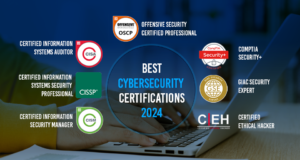
- What certifications do your analysts hold (CISSP, GIAC, CEH)?
The answers will reveal whether you are dealing with a serious security organization or a reseller with limited in-house capability.
Evaluating Service Level Agreements (SLAs)
Your SLA defines what you are entitled to and what happens when the provider falls short. Pay close attention to response time guarantees. A promise of “best effort” response is not acceptable. You want specific commitments: threat acknowledgment within 15 minutes, containment action within one hour, and full incident report within 24 hours.
Look for financial penalties tied to SLA violations. If the provider has no skin in the game, the SLA is just a marketing document. Also confirm that the agreement covers your entire environment, including cloud workloads, remote endpoints, and any operational technology systems.
Future-Proofing Your Business Against Emerging Threats
The threat environment will not slow down. AI-powered attacks are becoming more accessible to criminal groups. Deepfake audio and video are being used in business email compromise schemes. Quantum computing, while still emerging, poses a long-term risk to current encryption standards.
Your managed security provider should have a clear roadmap for adapting to these threats. Ask about their investment in AI-driven detection, their plans for post-quantum cryptography readiness, and how they stay ahead of new attack techniques. A provider that only defends against yesterday’s threats will leave you exposed tomorrow.
Business owners who treat cybersecurity as a strategic priority rather than a cost center will be the ones who survive the next major wave of attacks. The right managed security partnership gives you expert-level defense without the burden of building it yourself. Start your evaluation now. Review your current security posture, identify gaps, and begin conversations with at least two or three qualified MSSPs. The cost of waiting is measured in breaches, and breaches are measured in millions.
Ready to Get Started?
Talk to CyberPhore's team. We'll assess your needs and design a custom solution.
Free Security Assessment