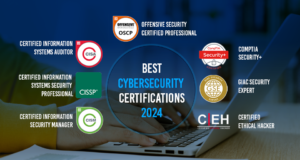
Cybersecurity certification serves as a formal recognition of an individual’s expertise in the vast field of cybersecurity. These certifications are typically awarded by professional organizations and institutions, validating a candidate’s skill set, knowledge, and competency to address cybersecurity threats and challenges. Given the rising prevalence of cyber threats, the importance of cybersecurity certification has become increasingly pronounced, serving not only as a credential but as a testament to one’s commitment to mastering the principles and practices necessary for safeguarding information systems.
Table of Contents
- Introduction to Cybersecurity Certification
- Types of Cybersecurity Certifications
- Benefits of Obtaining Cybersecurity Certifications
- Popular Cybersecurity Certification Programs
- Choosing the Right Certification for Your Career Path
- The Certification Process: What to Expect
- Maintaining Cybersecurity Certification: Continuing Education and Renewal
- The Impact of Cybersecurity Certifications on the Industry
- Conclusion: The Future of Cybersecurity Certifications
Need Expert Cybersecurity Help?
Get expert guidance from CyberPhore. We design, deploy, and manage comprehensive cybersecurity programs with measurable outcomes.
Book a Free ConsultationIntroduction to Cybersecurity Certification
The landscape of cybersecurity has evolved significantly over the past few decades. Initially, cybersecurity roles were populated mostly by IT professionals with varied backgrounds. However, as cyber attacks grew more sophisticated, the need for specialized knowledge emerged, prompting the development of dedicated cybersecurity certification programs. These programs now encompass a range of disciplines, including ethical hacking, network security, and incident response, reflecting the myriad challenges organizations face in protecting their digital assets.
Obtaining a cybersecurity certification can significantly enhance an individual’s career prospects. Employers often prefer candidates with recognized certifications as it demonstrates not only technical aptitude but also a professional dedication to the field. Certifications such as Certified Information Systems Security Professional (CISSP), CompTIA Security+, and Certified Ethical Hacker (CEH) are recognized benchmarks that signal an individual’s proficiency and commitment to cybersecurity practices. As cybersecurity threats continue to evolve, the demand for qualified professionals equipped with certifications will likely remain high, underscoring their importance in the industry.
Types of Cybersecurity Certifications
In the rapidly evolving landscape of cybersecurity, certifications play a pivotal role in validating an individual’s skills and knowledge in the field. These certifications are categorized into three primary levels: foundational, intermediate, and advanced, each serving to equip professionals with crucial competencies required for their respective roles.
Foundational certifications are ideal for those new to the field of cybersecurity. They provide a solid grounding in the basic principles, concepts, and practices of information security. A prominent example is the CompTIA Security+, which covers essential skills such as network security, compliance, and operational security. This certification is widely recognized and often recommended for entry-level positions, making it an excellent starting point for aspiring cybersecurity professionals.
Intermediate certifications are suited for those who have acquired some experience and are seeking to deepen their expertise. One of the most sought-after certifications at this level is the Certified Ethical Hacker (CEH). This credential focuses on understanding and addressing ethical hacking techniques and methodologies, enabling professionals to identify vulnerabilities within an organization’s systems effectively.
For experienced cybersecurity professionals looking to advance their careers, advanced certifications are highly beneficial. The Certified Information Systems Security Professional (CISSP) is a distinguished certification that demonstrates an individual’s ability to design, implement, and manage a best-in-class cybersecurity program. Recognized globally, the CISSP certification requires a thorough understanding of various domains within cybersecurity, making it a valuable asset for those in leadership or strategic roles.
Overall, the selection of cybersecurity certifications is diverse, catering to varying levels of expertise. By pursuing these credentials, professionals can enhance their skills and increase their employability in a competitive job market.
Benefits of Obtaining Cybersecurity Certifications
In today’s digital landscape, the necessity for robust cybersecurity measures has never been more pronounced. As threats become increasingly sophisticated, the demand for qualified cybersecurity professionals continues to surge. One of the most effective ways to distinguish oneself in this competitive field is by obtaining cybersecurity certifications. These credentials not only bolster individual expertise but also provide numerous tangible advantages.
Firstly, obtaining a cybersecurity certification can significantly enhance job prospects. Employers often prioritize candidates who can demonstrate their knowledge and commitment through certification. This is because certified professionals are perceived as having verified skills and understanding of current cybersecurity protocols, which are essential in protecting organizational assets. Furthermore, certain certifications, such as Certified Information Systems Security Professional (CISSP) or Certified Ethical Hacker (CEH), are recognized globally, further opening doors for career advancement.
Another critical benefit is the potential for increased salary. Cybersecurity roles are generally among the highest-paid positions in the tech industry. According to various industry reports, individuals with cybersecurity certifications typically command higher salaries compared to their non-certified counterparts. This salary premium reflects both the critical nature of the role and the specialized knowledge required to perform it effectively.
In addition to improving job prospects and salary potential, certifications validate an individual’s skills and technical competencies. Certifications ensure that professionals possess up-to-date knowledge of the latest cybersecurity trends and technologies. The dynamic nature of the field necessitates a continuous learning approach, and ongoing certification can provide targeted education on emerging threats, compliance regulations, and advanced mitigation strategies. By keeping abreast of these developments, certified professionals can implement more effective security measures, thus safeguarding their organizations.
Overall, the benefits of obtaining cybersecurity certifications are manifold, including enhanced career opportunities, improved earning potential, and validated expertise. As organizations continue to prioritize cybersecurity, the importance of certification in this crucial field cannot be overstated.
Popular Cybersecurity Certification Programs
The field of cybersecurity is constantly evolving, and obtaining certification can significantly bolster a professional’s qualifications. There are several esteemed certification programs available, each tailored to different areas of expertise and skill levels.
One of the most acknowledged certifications is the Certified Information Systems Security Professional (CISSP) offered by (ISC)². This program is primarily aimed at experienced security practitioners, managers, and executives. The CISSP covers a wide array of topics, including security and risk management, asset security, and security engineering. Candidates are required to have at least five years of cumulative, paid work experience in two or more domains of the CISSP Common Body of Knowledge (CBK) before taking the rigorous exam.
Another popular choice is the CompTIA Security+ certification, which serves as a stepping-stone for newcomers to cybersecurity. This certification emphasizes baseline cybersecurity skills and includes topics such as network security, compliance, and operational security. There are no prerequisites for Security+, making it accessible to beginners. However, having a foundational understanding of IT networking is advantageous for those preparing for the exam.
ISACA offers the Certified Information Security Manager (CISM) certification, which is geared towards professionals focused on managing and overseeing an organization’s information security strategy and operations. Candidates must possess at least five years of work experience in information security management, with at least three years in a specific area covered by the CISM exam.
Lastly, the SANS Institute provides a variety of certifications, including the Global Information Assurance Certification (GIAC). SANS focuses on practical, hands-on training that equips participants with the knowledge required to immediately apply their skills. Each GIAC certification covers different cybersecurity domains, and candidates are encouraged to take specific courses offered by SANS prior to the exam.
These programs play a pivotal role in strengthening the cybersecurity workforce, ensuring that professionals are equipped with the necessary skills to tackle current and emerging threats effectively.
Choosing the Right Certification for Your Career Path
Cybersecurity certifications serve as a significant milestone in advancing one’s career within the information security sector. When selecting the most suitable certification, it is imperative to consider several factors, including your career ambitions, current skill set, and the specific demands of the industry.
Firstly, defining your career aspirations is crucial. Determine whether you aim to specialize in areas such as penetration testing, incident response, or network security. Different roles often necessitate distinct skills and knowledge bases, which can guide you in choosing a certification that aligns with your objectives. For example, if you aspire to be a penetration tester, certifications like Certified Ethical Hacker (CEH) or Offensive Security Certified Professional (OSCP) may be more beneficial compared to generalized security certifications.
Secondly, assess your current expertise in cybersecurity. If you are just starting or transitioning from another IT field, entry-level certifications such as CompTIA Security+ or Certified Cybersecurity Entry-level Technician (CCET) can provide a foundational understanding without overwhelming you. Conversely, if you possess advanced skills, pursuing specialized certifications may streamline your career progression and enhance job prospects.
Additionally, consider industry requirements when making your decision. Many employers seek individuals with certain certifications as a benchmark for hiring and advancement. Research job listings within your desired domain to identify frequently requested certifications and align them with your training and education. Certifications like Certified Information Systems Security Professional (CISSP) or Certified Information Security Manager (CISM) are commonly sought after by employers in managerial roles.
In essence, choosing the right cybersecurity certification involves a careful analysis of your career goals, existing skills, and industry needs, ensuring that your professional development is both targeted and effective.
Protect Your Business Now
From detection to response, get complete protection with CyberPhore.
Get ProtectedThe Certification Process: What to Expect
Obtaining a cybersecurity certification is a structured process that involves several key steps. Initially, prospective candidates must identify the specific certification that aligns with their career goals. There are various certifications available, such as CompTIA Security+, Certified Information Systems Security Professional (CISSP), and Certified Ethical Hacker (CEH), each catering to different levels of expertise and areas of focus within cybersecurity.
Once a certification path has been chosen, the next step is to gather study materials and resources. There are a multitude of options available, including official certification guides, online courses, and practice exams. Many candidates benefit from enrolling in boot camps or community college classes that focus on cybersecurity principles and exam preparation. Engaging with online forums and study groups can also provide valuable support and insights into the exam format.
Registration for the exam is typically conducted through the certifying body’s website. Candidates should ensure they meet any prerequisites, which can include prior experience or educational requirements. The registration process will typically require candidates to create an account, select an exam date, and pay the associated fees. After registration, candidates should develop a study schedule that allows ample time for comprehensive review of the material. It is advisable to dedicate several weeks, or even months, depending on one’s level of prior knowledge and experience.
When preparing for the exam, practice exams and simulations can be particularly beneficial. These resources help candidates familiarize themselves with the format and types of questions they will encounter. Additionally, understanding the exam’s structure, including how long it will take and the passing score, is crucial for successful navigation. Candidates should aim to remain calm and focused during the event, as good exam-taking strategies can greatly enhance performance.
Maintaining Cybersecurity Certification: Continuing Education and Renewal
In the ever-evolving realm of cybersecurity, the significance of maintaining cybersecurity certifications cannot be overstated. Professionals who hold certifications must fulfill specific requirements for recertification, which typically include earning Continuing Education Units (CEUs). These units serve as a benchmark to ensure that certified individuals remain up-to-date with the latest trends, technologies, and best practices within the industry.
CEUs can be acquired through various avenues, emphasizing the importance of ongoing learning in cybersecurity. Workshops, webinars, and conferences are particularly valuable sources of education, providing both theoretical knowledge and practical skills applicable to real-world situations. Participation in these learning opportunities not only helps professionals stay current with emerging threats and changing regulations but also fosters networking and collaboration with peers.
Moreover, many certifying organizations require a predetermined number of CEUs to be amassed within a specified time frame to maintain licensure. This requirement reinforces the commitment of certified individuals to continuous professional development. Engaging in webinars often allows for flexible learning, catering to schedules that might otherwise be constrained by full-time job responsibilities.
Additionally, industry-specific seminars and conferences frequently cover new technologies such as artificial intelligence and blockchain, both of which are becoming increasingly relevant to cybersecurity. These platforms facilitate discussions on recent case studies and trends, further enriching the knowledge base necessary for professionals in the field. To ensure career longevity and professional competency, it is essential for individuals to actively pursue these learning opportunities.
Keeping up with advances in technology through continuous education demonstrates a commitment to professional excellence and workplace security, ultimately benefiting organizations and their stakeholders.
The Impact of Cybersecurity Certifications on the Industry
Cybersecurity certifications play a pivotal role in shaping the contours of the cybersecurity landscape. As organizations increasingly prioritize the safeguarding of their digital assets, a certified workforce becomes essential to effectively mitigate risks and address security challenges. With threats to information systems growing in complexity and frequency, having personnel who meet recognized certification standards equips organizations with the skills necessary to maintain robust security protocols.
Furthermore, certifications enhance the overall security posture of organizations. When employees hold valid cybersecurity certifications, they demonstrate their commitment to the profession and their knowledge of current threats and best practices. This proficiency fosters a culture of security awareness within the organization, encouraging adherence to established protocols and driving efficiency in threat detection and response. Consequently, an organization can better safeguard sensitive data, ensuring compliance with regulatory mandates and avoiding potential financial losses associated with data breaches.
Moreover, the presence of certified professionals within an organization cultivates trust among stakeholders, including clients, partners, and regulatory entities. Stakeholders are more likely to engage with organizations that display a commitment to cybersecurity through certification, positively impacting business relationships and fostering a sense of security among clients. This trust is paramount in today’s digital economy, where data breaches can lead to devastating reputational damage.
Ultimately, the emphasis on cybersecurity certifications contributes to a more secure digital environment. The collective expertise of certified professionals not only enhances individual organizations’ defenses but also raises the overall standards of cybersecurity practices throughout the industry. In fostering higher qualifications, the industry stands better equipped to face evolving cyber threats, ensuring a more resilient and secure future.
Conclusion: The Future of Cybersecurity Certifications
As we have explored throughout this comprehensive guide, cybersecurity certifications play a crucial role in the professional development of individuals within the field. These credentials not only validate one’s knowledge and skills but also enhance job prospects and career advancement opportunities. The growing frequency and sophistication of cyber threats necessitate the ongoing education and certification of cybersecurity professionals to stay ahead in a rapidly evolving landscape.
Looking ahead, the demand for cybersecurity certifications is expected to rise significantly. Organizations are increasingly prioritizing cybersecurity measures to protect their sensitive data and systems. Consequently, professionals with credible certifications will continue to be highly sought after. Moreover, as new regulations and compliance requirements emerge, the relevance of certifications will further increase, making them essential for career sustainability.
The swift evolution of technology also affects the landscape of cybersecurity certifications. Emerging technologies such as artificial intelligence, machine learning, and cloud computing are reshaping how cybersecurity professionals approach challenges. Certifications that incorporate these technological advancements will become critical for ensuring effective cybersecurity practices. Professionals will need to constantly update their knowledge and skills to remain competent in these areas, indicating that adaptability will be essential.
In light of these developments, the future of cybersecurity certifications will be characterized by a need for professionals who are not only well-versed in current methods but are also proactive in acquiring new skills and certifications. Emphasizing lifelong learning and adaptation will empower cybersecurity professionals to respond effectively to ongoing threats. Ultimately, as the cybersecurity landscape transforms, so too will the certifications that define best practices and standards for the industry.
Ready to Get Started?
Talk to CyberPhore's team. We'll assess your needs and design a custom solution.
Free Security Assessment