Entry level cybersecurity jobs are still one of the clearest ways into a field that keeps growing, but the path is less about “breaking in” and more about proving you can do real work. If you want a practical view of the roles, skills, pay, and hiring patterns that matter, you need to understand how employers actually think.
Table of Contents
- What Entry-Level Cybersecurity Jobs Look Like Today
- Entry-Level Cybersecurity Roles You Can Target
- Skills Employers Expect From Beginners
- Education and Certifications That Open Doors
- How to Build Experience Without a Cybersecurity Job
- How to Write a Resume That Gets Interviews
- How to Search and Apply for the Right Roles
- What Employers Are Really Looking For
- Salary Expectations and Career Growth
- How CyberPhore Supports Small Business Security Careers and Readiness
- A Practical First 90-Day Plan
- Frequently Asked Questions
- Build the kind of proof hiring managers trust
Need Expert Cybersecurity Help?
Get expert guidance from CyberPhore. We design, deploy, and manage comprehensive cybersecurity programs with measurable outcomes.
Book a Free ConsultationEntry level cybersecurity jobs are junior security roles, often in SOC, analyst, support, audit, or operations teams, where you monitor systems, spot risks, document issues, and escalate problems before they become business disruptions. The best candidates rarely arrive with perfect experience. They arrive with evidence: certifications, labs, IT exposure, and the judgment to handle security work carefully.
What Entry-Level Cybersecurity Jobs Look Like Today
The market for entry level cybersecurity jobs stays strong because the work keeps expanding and the talent pool stays short. U.S. demand for information security analysts is projected to grow 29% from 2024 to 2034, which is far faster than average, and workforce gap estimates still point to hundreds of thousands of unfilled cybersecurity roles. That gap creates room for beginners who can show practical skill and a steady approach.
A lot of hiring now reflects a simple reality: organizations need more hands than they have, but they do not want to trade down on quality. That is why beginner roles often ask for proof of competence rather than years of direct cyber experience. The field rewards people who can learn quickly, follow process, and stay calm when alerts start stacking up.
Why Entry-Level Cybersecurity Hiring Stays Strong
There is still a structural shortage of workers, not just a temporary hiring cycle. Industry reporting has estimated 29% employment growth for information security analysts over the decade, while other labor summaries show a broad shortage of open roles across the U.S. market. In plain terms, the work keeps coming, and employers keep looking for dependable junior talent to help carry it.
Pay also keeps interest high. Entry-level roles frequently land well above many other starter careers, which makes the field attractive even before you factor in advancement. That combination of growth, compensation, and long-term mobility keeps beginner cyber hiring active.
What “Entry Level” Really Means in Cybersecurity
“Entry level” does not mean no preparation. It usually means no prior cybersecurity title is required, but some mix of IT exposure, certification, labs, or adjacent technical experience is expected. Many job posts still prefer one year or more in help desk, network support, systems administration, or a similar area.
That is why so many beginners feel stuck. They see “entry level,” then find a list of skills that looks mid-career. The smart move is to treat the title as a signal of lower experience, not as a promise of zero expectations.
Entry-Level Cybersecurity Roles You Can Target
You do better when you target roles with purpose instead of applying to every security-flavored title you see. The most common entry points cluster around monitoring, support, assessment, and response. Each one teaches a different slice of the security stack.
SOC Analyst
A SOC analyst sits close to security operations. You monitor alerts, review suspicious activity, triage events, and escalate problems that need deeper investigation. In many teams, this is the first true security role because it teaches you how real incidents move through a workflow.
The job is part detective work, part discipline. You learn to separate noise from signal, document what happened, and hand off clean notes so the next person can act fast. That skill matters because a messy handoff slows response and increases risk.
Security Analyst
Security analyst roles focus on reviewing systems, identifying weaknesses, and helping enforce controls. You may inspect logs, track vulnerability findings, support access reviews, or help maintain policies across endpoints, cloud tools, and business applications.
This role is often broader than SOC work. Instead of only reacting to alerts, you spend time looking at the shape of the environment and asking where risk sits. If you like pattern recognition and structured problem-solving, this path fits well.
Incident Responder
Incident responders handle the moments when something has already gone wrong. You help contain threats, investigate what happened, preserve evidence, document findings, and support recovery. The pace is usually faster, and the stakes feel higher because downtime and data loss are both on the table.
For beginners, this role often appears as a support function inside a larger team. You will not run the entire response on day one. You will learn how incidents are triaged, how remediation gets tracked, and why clean documentation makes recovery faster.
IT Support, Help Desk, and Network Technician Roles with Security Duties
These roles are the most practical on-ramp for many beginners. Help desk and network technician work exposes you to access control, endpoint troubleshooting, patching, password resets, device setup, and user behavior, which are all security-relevant. You also learn how systems fail in ordinary business life, not just in clean training labs.
That experience is valuable because security is built on how the environment actually runs. A help desk technician who understands authentication, device hygiene, and escalation paths is already learning security operations from the inside.
Junior Penetration Tester and IT Auditor
These are more specialized starter roles, and they sit closer to the advanced edge of entry-level hiring. A junior penetration tester supports supervised testing, verifies vulnerabilities, and helps document remediation paths. An IT auditor reviews controls, checks compliance, and looks for gaps between policy and practice.
Both roles demand stronger technical focus. Employers expect you to understand fundamentals and follow methodology carefully, because sloppy testing or weak evidence collection creates problems fast. They are good targets, but only when your preparation is already solid.
Skills Employers Expect From Beginners
Employers do not expect mastery from day-one candidates. They do expect a working foundation, clear communication, and the ability to learn without constant supervision. That mix is what turns a beginner into a useful hire.
Technical Foundations You Need First
Start with networking, operating systems, security tools, incident response basics, and introductory cloud knowledge. You need to understand how traffic moves, what DNS and DHCP do, how Windows and Linux differ, and how logs support investigation. Without that base, security tools feel like random dashboards instead of useful systems.
A strong beginner also understands basic controls and frameworks, even at a high level. That means knowing why access control matters, why patching matters, and why monitoring matters. Security is not magic. It is disciplined management of risk across systems you already use every day.
Soft Skills That Separate Strong Candidates
Communication matters because security work lives inside the business, not outside it. You need to explain what you found, what it means, and what needs to happen next without turning every update into jargon. Problem-solving and analytical thinking matter just as much because the job is really about narrowing uncertainty.
Attention to detail is nonnegotiable. A missed indicator, a sloppy note, or an incomplete handoff can slow response and create avoidable exposure. Employers notice candidates who stay organized, ask smart questions, and document clearly.
Scripting, Cloud, and Security Monitoring Basics
Scripting sits higher on the list every year. Python, Bash, PowerShell, and a little SQL appear often in job descriptions because they help you inspect data, automate small tasks, and work faster across security tools. You do not need to be a software engineer, but you do need enough scripting fluency to avoid freezing when a task requires it.
Cloud familiarity also matters more than it used to. Many teams now expect junior candidates to recognize basic cloud concepts, understand shared responsibility, and know where logs, permissions, and misconfigurations create risk. Add basic SIEM awareness and alert analysis, and you will match what hiring managers actually screen for.
Education and Certifications That Open Doors

Education helps, but it does not need to follow one rigid path. Employers care about whether you can do the work, not whether your path looked traditional. The point is to build proof, not collect credentials for their own sake.
Do You Need a Degree for Entry-Level Cybersecurity Jobs?
A degree helps, but it is not a hard requirement across the board. Associate degrees, bachelor’s degrees, certifications, and practical work can all support your candidacy. In many job samples, a degree appears as preferred rather than mandatory, and a large share of postings do not explicitly require one.
That said, a degree still helps when you are competing against other beginners with similar certifications. If you already have an IT degree or a related program, use it. If you do not, do not wait for one before applying.
Best Beginner Certifications to Start With
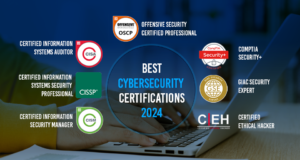
For most beginners, CompTIA Security+ is the cleanest first certification because it covers baseline security concepts and appears often in job postings. ISC2 Certified in Cybersecurity is another strong starting point for demonstrating entry-level knowledge. Both signal that you understand the vocabulary and the core ideas employers expect.
Some candidates also benefit from Network+ or Google IT Support, especially when their IT foundation is thin. The goal is not to stack certificates endlessly. The goal is to show that your foundation is real and current.
When Additional Training Helps
Bootcamps, structured coursework, apprenticeships, and internships help when they include hands-on work and real feedback. That is the key distinction. A training program that gives you labs, projects, and practical evaluation has value. A program that only hands you videos and a badge does not move the needle much.
Hiring teams respond to evidence. If your training gives you something concrete to show, it supports the application. If it does not, it becomes expensive noise.
How to Build Experience Without a Cybersecurity Job
You do not need a security title to start building security proof. In fact, that is the normal path for most beginners. The trick is to make your experience visible and specific.
Home Labs and Practice Environments
A home lab gives you a safe place to practice the basics. Set up virtual machines, work with networking tools, test hardening steps, and watch how logs change when you trigger a simple event. The goal is not to impress anyone with complexity. The goal is to show that you can learn by doing.
Use your lab to practice detection and response, not just setup. That matters because many beginners know security theory but have never watched an alert turn into an investigation. A lab turns abstract concepts into habits.
CTFs, TryHackMe, Hack The Box, and GitHub Projects
Capture the flag platforms and guided labs show initiative and problem-solving. TryHackMe and Hack The Box are useful because they force you to think through recon, exploitation, and defense in a structured way. GitHub can hold writeups, scripts, and project notes that make your work easy to review.
Employers like visible proof because it reduces guesswork. A short, clean writeup that explains what you tested, what you found, and what you learned says more than vague claims about “passion.” Keep it practical.
Transferable Experience From IT, Support, or Operations
Help desk, desktop support, network technician, and sysadmin work all transfer well into security. You already understand tickets, urgency, user impact, patching, password resets, access issues, and escalation paths. That is not separate from cybersecurity. It is the front edge of it.
If you already work in operations, translate your experience into security language. Focus on incidents resolved, systems protected, and downtime reduced. That framing makes your background relevant instead of merely adjacent.
How to Write a Resume That Gets Interviews
Your resume should make it easy to see why you fit an entry-level security role. That means putting proof above fluff and relevance above generalism. A hiring manager should know your target within seconds.
What to Put at the Top of Your Resume
Lead with a tight summary, your certification list, and your strongest technical areas. If you have Security+, CC, Network+, lab work, or IT support experience, place those where they cannot be missed. Then align your skills section with the job description language you actually want.
Do not bury the signal. If the role asks for SIEM, incident response, or networking fundamentals, those terms belong near the top when you genuinely have them.
How to Frame Labs, Projects, and Certifications
Treat labs like work, not homework. Write them in terms of what you built, tested, monitored, or documented. A project that hardens a VM, reviews logs, or analyzes a simulated incident is relevant because it demonstrates process and judgment.
Certifications should appear as proof of baseline competence, not as decoration. If a certificate helped you learn logging, identity, or network defense, connect that knowledge to the role you want. Business value comes from what the skill enables, not the badge itself.
Common Resume Mistakes to Avoid
The biggest mistake is a vague skills dump. Another is using a generic resume for every security role. If you are applying to SOC jobs, your resume should look different from one aimed at audit or penetration testing.
Also avoid clutter. A crowded page full of weak buzzwords sends the wrong signal. Clear formatting, relevant keywords, and measurable experience do far more than fancy design.
How to Search and Apply for the Right Roles
Apply where beginners actually get hired. That sounds obvious, but a lot of candidates waste time chasing titles that quietly require mid-level experience. Search with precision and read postings like a hiring manager.
Best Job Titles to Search For
Use titles such as SOC analyst, security analyst, IT support specialist, help desk technician, network technician, incident analyst, security administrator, and junior penetration tester. These titles map to real beginner pipelines and often show up in companies with active security operations.
Cast a wide enough net to catch adjacent roles too. A role with security duties inside IT support often gives you a better first step than a glamorous title with impossible requirements.
How to Read Job Descriptions Like a Hiring Manager
Separate required skills from preferred skills. Required skills tell you whether you are close enough to apply. Preferred skills show you what to learn next. Also look for language about troubleshooting, logging, alert triage, or access control, because those usually signal real entry-level work.
Be wary of postings that say entry level but still ask for several years of experience. That is common. Do not let the title trick you into overestimating accessibility.
How to Apply Broadly Without Wasting Time
Apply in batches, but tailor the top third of your resume for each role type. Keep one version focused on SOC work, one on IT support and operations, and one on audit or testing if you are ready for it. That gives you range without turning the process into random spam.
Track every application, follow up where appropriate, and keep your pipeline organized. A disciplined search wins more often than a frantic one.
Protect Your Business Now
From detection to response, get complete protection with CyberPhore.
Get ProtectedWhat Employers Are Really Looking For
Hiring teams want a candidate who reduces risk, learns quickly, and follows process without drama. That is the real filter. Degrees and certifications help, but they do not replace reliability.
Proof of Skill Matters More Than Job History
Hands-on proof now carries real weight. Labs, certifications, projects, CTF writeups, and adjacent IT work all show that you can perform the basics. Employers use those signals to separate genuine preparation from generic interest.
The important shift is this: you are not trying to prove that you have done the exact job before. You are proving that you can handle the work now, under supervision, with room to grow.
Business Reliability Still Counts
Security teams protect uptime, continuity, and reputation. That means attendance, follow-through, documentation, and calm execution matter as much as technical ability. A person who misses details or drops tasks creates business risk quickly.
The best junior hires make operations easier. They communicate early, escalate cleanly, and keep records accurate. Simple discipline goes a long way.
Why Security Teams Value Simple, Steady Execution
Good security rarely depends on flashy moves. It depends on steady monitoring, clear ownership, controlled changes, and a reduced chance of surprises. That is the same thinking behind managed protection systems like CyberPhore, where the value comes from consistent discipline, simpler operations, and lower complexity that supports long-term resilience.
For a beginner, that mindset matters. The more you can show that you work methodically and keep things under control, the more trustworthy you look to a security team.
Salary Expectations and Career Growth
Pay is one of the main reasons people enter this field. Entry-level cybersecurity jobs usually pay well, and the ceiling rises quickly once you build experience. That makes the first role a launch point, not a finish line.
Typical Entry-Level Salary Ranges
Current reporting puts many entry-level cyber roles in the roughly $70,000 to $105,000 range, with some analyst and support roles falling below or above that band depending on scope, location, and clearance. A Cybersecurity Analyst can land higher, while a junior penetration tester or IT security specialist may fall within a narrower range depending on employer needs.
The spread is real. But even at the lower end, the field often compares favorably with other first-career options.
What Influences Pay
Location matters. So do clearance requirements, cloud exposure, scripting ability, certifications, and prior IT work. A candidate with help desk experience and Security+ usually enters stronger than a candidate with only classroom learning.
Specialization also changes pay. SOC, audit, incident response, and testing all value different mixes of speed, precision, and depth. The more directly your background matches the role, the better your starting point.
How Entry-Level Roles Lead to Long-Term Growth
Your first job teaches you how security works inside a real business. After that, you can move into analyst, engineer, responder, auditor, cloud security, or penetration testing paths. Each step becomes easier because you already understand how incidents, controls, and operations fit together.
That early experience compounds. The people who grow fastest are the ones who treat the junior role as a learning system, not just a paycheck.
How CyberPhore Supports Small Business Security Careers and Readiness
Security careers are easier to understand when you see how protection works in a real business setting. CyberPhore helps small businesses stay protected with the discipline of a much larger security team, without forcing them to manage unnecessary complexity. That same approach mirrors the habits employers want in junior security staff.
Why Managed Protection Matters for Growing Teams
Small businesses need continuity. They cannot afford scattered tools, inconsistent monitoring, or unresolved risks that quietly build up until an incident hits operations. Managed protection keeps watch continuously, reduces exposure, and supports business uptime without adding more operational burden.
That matters for anyone entering the field, because good security work is never just about alerts. It is about preserving normal business function.
What Security Professionals Learn in a Real-World Protected Environment
A protected environment teaches process. You see how monitoring, escalation, documentation, and remediation fit together when the pressure is real and the business depends on clean execution. That is exactly the context where entry-level professionals grow fastest.
You also learn that security work is repeatable. Strong teams do not improvise everything from scratch. They use disciplined procedures to keep response fast and mistakes small.
Why Simplicity and Lower Complexity Improve Security Outcomes
Complexity creates gaps. Simplicity lowers cost, reduces confusion, and makes controls easier to manage over time. For small businesses, that translates into better protection and fewer blind spots. For you as a beginner, it also clarifies how security decisions connect to business continuity.
The lesson is straightforward: the best security posture is not the one with the most tools, it is the one you can operate consistently.
A Practical First 90-Day Plan
The fastest way to move forward is to stop treating preparation as a vague future project. Build a sequence. Keep it simple. Execute it.
Days 1, 30: Learn the Core Basics
Focus on networking, operating systems, security fundamentals, and one beginner certification path. Security+, CC, or Network+ gives you structure while you learn the language of the field. At the same time, start getting comfortable with logs, command-line basics, and common security terms.
Do not overbuild. You need momentum, not perfection.
Days 31, 60: Build Proof
Create one home lab, one short project, and one writeup that explains what you learned. Add those to your resume and LinkedIn profile in plain language. If you have help desk or IT tasks already, reframe them in security terms.
You want visible evidence that you can troubleshoot, document, and think clearly. That is what hiring teams scan for.
Days 61, 90: Apply and Interview Confidently
Start applying to true entry-level roles, internships, apprenticeships, and adjacent IT roles with security responsibilities. Practice interview answers around incidents, problem-solving, and what you built. If you are weak in a technical area, say so directly and show how you are fixing it.
Momentum matters here. The candidates who apply consistently and improve as they go usually beat the ones who wait for perfect readiness.
Frequently Asked Questions
Do entry level cybersecurity jobs require experience?
Not always, but most still expect some proof of readiness. Certifications, labs, help desk work, internships, or home projects fill that gap and make your application believable.
What is the easiest entry point into cybersecurity?
Help desk, IT support, and SOC Tier 1 roles are the most common on-ramp. They expose you to access issues, logging, escalation, and user support, which all translate directly into security work.
Is Security+ enough to get a cybersecurity job?
Security+ helps a lot, but it is strongest when paired with hands-on proof. A certification gets attention. Labs, projects, or IT experience help you convert that attention into an interview.
Can you get into cybersecurity without a degree?
Yes. Many entry-level jobs prioritize certifications, troubleshooting ability, and practical skills over a degree. A degree helps, but it is not the only path in.
Which skills matter most for beginners?
Networking, operating systems, basic scripting, security tools, incident response, communication, and attention to detail. If you can explain what you found and why it matters, you are already ahead of many applicants.
How long does it take to land your first role?
A focused beginner can move much faster than most people expect, especially with labs, certifications, and a targeted application strategy. The pace depends on how quickly you build proof and how consistently you apply.
Build the kind of proof hiring managers trust
Once you understand how entry level cybersecurity jobs are באמת filled, the path gets clearer. Learn the basics, show practical work, target real beginner roles, and present yourself as someone who reduces risk instead of adding it. That is the difference between hoping to break in and actually getting hired.
Ready to Get Started?
Talk to CyberPhore's team. We'll assess your needs and design a custom solution.
Free Security Assessment